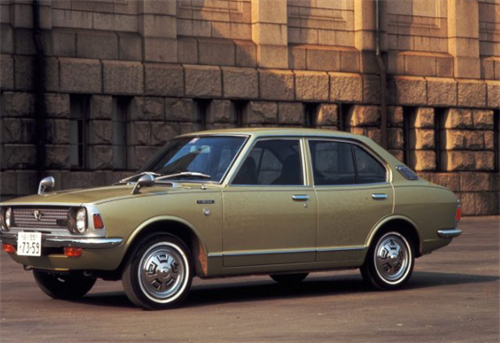
Japan’s K-Car Culture: The Art of the Urban Compact

In the global automotive landscape, Japan’s K-Car (Kei car) culture stands out as a unique and refined phenomenon. Though modest in size, these vehicles are celebrated for their thoughtful design, technical innovation, and perfect alignment with the demands of urban life in Japan. More than mere modes of transport, K-Cars embody Japan’s pursuit of practicality, aesthetics, and efficiency in perfect harmony.
Origins and Definition of the K-Car:
The term K-Car refers to vehicles that meet the specifications of Japan’s Kei car classification, a set of regulations introduced in 1950 to promote affordable, efficient transportation in the face of post-war economic challenges. Under these rules, a K-Car must not exceed 660cc in engine displacement, 3.4 meters in length, or 1.48 meters in width, and it must meet strict weight limits. These limitations give rise to compact, lightweight cars perfectly suited to the constraints of urban Japan.
Far beyond practicality, K-Cars have come to symbolize a distinct cultural identity. Known for their affordability and everyday usability, they are beloved for their smart proportions and charming aesthetic — playing a vital role in daily life for millions.
A Balance of Lightness and Utility:
Compared to the larger vehicles popular in many other countries, K-Cars are defined by their compact dimensions. In a country where land is scarce and cities are densely populated, these nimble cars offer significant advantages. Their small footprint makes navigating narrow streets and squeezing into tight parking spots effortless — a daily necessity in urban Japan.
Despite their size, K-Cars don’t sacrifice comfort. They’re often equipped with efficient fuel systems, making them ideal for long commutes or regular use. For many families and individuals looking to cut transportation costs, they offer an economical yet highly practical solution.
But the true charm of K-Cars goes beyond fuel economy and convenience — it lies in their thoughtful design. Many adopt a minimalist philosophy that blends functionality with visual appeal. Careful spatial engineering allows even these tiny cars to offer surprisingly roomy interiors, often spacious enough for a family of three or four.
Big Ideas in Small Packages:
K-Cars are known for their playful and innovative styling. Despite their modest size, each model expresses a unique personality, often with a friendly, approachable aesthetic. Vehicles like the Suzuki Alto, Honda Acty, and Nissan March stand out with distinctive designs that mix style with substance. Bold color choices, smooth contours, and a cheerful presence make K-Cars instantly recognizable.
The interior design of K-Cars is no less impressive. Though compact, their cabins are cleverly arranged to maximize comfort and usability. Many models feature high-quality materials, smart infotainment systems, and intuitive controls — all packed into a refined, space-efficient layout. The driving experience remains engaging and comfortable, regardless of the car’s small stature.
K-Cars and Their Deep Cultural Connection:
K-Cars are more than just products of engineering — they are reflections of Japanese values and lifestyle. In a culture that prizes elegance in simplicity, subtlety, and intelligent design, K-Cars represent a quiet kind of luxury: one that emphasizes value, efficiency, and understated beauty.
K-Cars aren’t just favored by budget-conscious consumers. Office workers, young professionals, and small business owners also gravitate toward them. Especially in major cities like Tokyo, K-Cars are a staple of the streetscape — zipping through alleyways, parking in impossibly tight spaces, and integrating seamlessly into urban life. Their popularity speaks not only to convenience but also to their status as fashion-forward, lifestyle-conscious vehicles.
K-Cars also align with Japan’s commitment to environmental sustainability. With rising awareness of carbon emissions and energy consumption, their low fuel usage and reduced emissions make them an ideal solution for eco-conscious driving. As such, K-Cars are at the forefront of Japan’s push for sustainable mobility — showcasing how smart design and green values can coexist.
Conclusion
Japan’s K-Car culture is a remarkable fusion of design, innovation, and lifestyle. It captures the essence of Japanese society’s emphasis on quality, efficiency, and thoughtful living. Far beyond being just compact cars, K-Cars are a testament to how constraints can inspire creativity — offering a small but powerful glimpse into Japan’s automotive ingenuity and cultural philosophy.