Cars + AI: Will the Future of Mobility Be “Rolling Robots”?
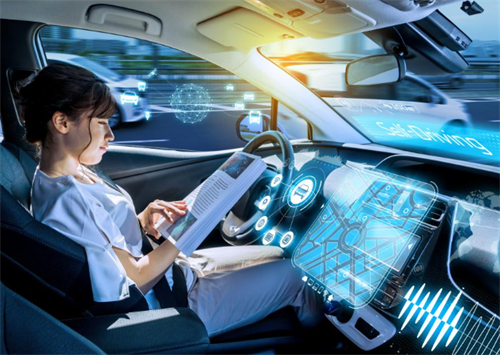
With the rapid advancement of artificial intelligence (AI), the way we move is quietly being transformed. In the automotive sector especially, AI is reshaping the driving experience—pushing cars beyond traditional transportation tools and toward a more intelligent, automated future.
The Fusion of AI and Automobiles: From Driver Assistance to Full Autonomy:
In recent years, the integration of AI in the auto industry has accelerated dramatically. Intelligent driving technologies are evolving cars from mere driver-controlled machines into smart “robots” capable of perception and decision-making.
The earliest applications of AI in cars came in the form of driver-assistance systems—features like automatic parking, blind-spot monitoring, and lane-departure warnings that significantly reduced the burden on human drivers.
As AI continues to evolve, the intelligence level of vehicles is also advancing. Companies like Tesla and Google’s Waymo have made notable progress in fully autonomous driving. These self-driving vehicles can operate without human input by relying on AI algorithms to process complex driving environments in real time. Equipped with an array of sensors—radar, LiDAR, and cameras—these cars gather environmental data, which AI then analyzes through deep learning to make driving decisions.
This marks a pivotal shift: vehicles are becoming not just automated, but truly intelligent. Beyond performing driving tasks, AI-equipped cars can interpret road conditions and react accordingly—potentially eliminating the need for human intervention altogether. In this sense, cars are on the path to becoming actual “rolling robots.”
Beyond Driving: Cars as Intelligent Mobile Service Platforms
If we view the car as a kind of mobile robot, its capabilities extend well beyond basic transportation. AI enables vehicles to deliver a wide range of intelligent services—from smart navigation and voice assistants to emotion recognition and in-cabin environmental controls.
For example, AI-powered voice assistants allow drivers to interact with their car through natural language, issuing commands to adjust climate settings, select routes, or even control media. Advanced systems can also use onboard cameras and sensors to detect a passenger’s facial expressions or physical condition, then adjust things like seating comfort, music, or ambient lighting to enhance the user experience.
This smart interaction transforms the car from a simple vehicle into a personalized mobile space.
Looking ahead, cars could evolve into multifunctional intelligent terminals. Vehicles might adapt settings based on a driver's habits, or even sync with smart home devices to prepare the home environment before the owner arrives. In essence, the car would function as a smart assistant on wheels, offering not only mobility but a suite of lifestyle-enhancing services.
Challenges and Opportunities for Intelligent Vehicles:
Despite the huge potential of AI in the auto industry, realizing the full vision of fully autonomous "rolling robots" still comes with significant challenges.
1. Technical Maturity
While autonomous driving technologies have advanced rapidly, real-world conditions—such as inclement weather, sudden hazards, and complex traffic patterns—remain difficult for current AI systems to manage. AI decision-making must continue to improve to ensure reliability and safety.
2. Legal and Ethical Issues
As vehicles become more autonomous, legal and ethical concerns come to the forefront. If a self-driving car causes an accident, who is liable—the automaker, the software developer, or someone else? Can an AI’s decisions align with human moral standards in critical situations? These questions are the subject of ongoing debate and regulation around the world.
3. Public Acceptance and Trust
Consumer skepticism is another hurdle. High-profile incidents involving autonomous vehicles have raised doubts about safety. Public trust in AI remains a significant factor that could either accelerate or hinder the adoption of intelligent vehicles.
Conclusion
The emergence of “rolling robots” has the potential to not only redefine personal mobility but reshape the entire transportation ecosystem. Cars may no longer be viewed as private assets, but as on-demand, flexible mobility services. Urban transportation could become more efficient, traffic accidents could decline dramatically, and environmental impact could be significantly reduced.