Is Germany’s No-Speed-Limit Autobahn Truly a Driver’s Paradise?
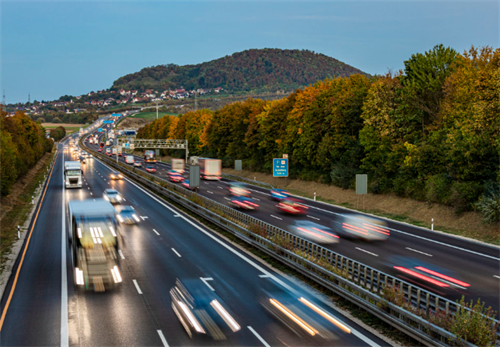
Germany’s Autobahn is world-renowned for its unique stretches of road where no official speed limit applies. For many driving enthusiasts, it symbolizes the ultimate freedom — a legal space to push vehicles to their limits. But does this high-speed liberty truly make the Autobahn a utopia for drivers? Or is there more behind the myth?
Freedom — with Boundaries:
Germany’s Autobahn ranks among the world’s most sophisticated highway networks. Its defining feature is that certain segments have no fixed speed limit, allowing drivers to determine their own pace based on vehicle capability, traffic flow, and road conditions. To many, this creates an unmatched thrill, especially for those with high-performance cars eager to stretch their legs.
Yet, freedom on the Autobahn doesn’t mean a free-for-all. Drivers are still bound by a strict set of rules.For example, slower cars are required to keep to the right lane, with the left lane reserved exclusively for passing. Drivers must also adjust their speed in accordance with weather, visibility, and congestion. So, while parts of the Autobahn are technically speed-limit-free, they still demand responsibility and situational awareness.
The Hidden Risks of Speed:
Although the Autobahn is often cited as one of the safest highway networks globally, its no-limit zones are not without risk. Some drivers take full advantage of the policy, regularly reaching speeds beyond 200 km/h (124 mph) — speeds at which even small misjudgments can have catastrophic consequences.
High-speed driving demands exceptional skill and top-tier vehicle performance. Not all vehicles — or drivers — are equipped for such speeds. Collisions at extreme velocity can be fatal, and sudden braking or changes in traffic flow increase the chance of accidents dramatically.
Furthermore, the stark difference in speeds between vehicles on the same stretch of road can be dangerous. A car cruising at 120 km/h (75 mph) may be overtaken by another traveling at nearly double that, creating split-second scenarios that test reflexes and decision-making under pressure.
Environmental and Social Responsibility:
The environmental cost of high-speed driving is another contentious point. Vehicles consume significantly more fuel at higher speeds, leading to increased emissions. While Germany has made strides in reducing its carbon footprint, high-speed driving remains an obstacle in the fight against climate change. In urban-adjacent regions, unregulated highway speeds may exacerbate pollution and degrade air quality.
There’s also a cultural misconception about “no speed limits” being equivalent to “no rules.” In reality, the Autobahn’s safety record depends heavily on rigorous infrastructure, regular maintenance, and well-enforced driving laws. Without this foundation of order and oversight, the freedoms it affords could become dangerous liabilities.
The Global Context:
Germany isn’t entirely unique in offering speed-limit-free roads — some parts of the UAE, for example, allow similar conditions. But these cases are exceptions rather than norms, and the success of Germany’s Autobahn relies on factors like disciplined driving culture, advanced road engineering, and robust traffic law enforcement. Trying to replicate this system in countries with different road conditions and driver behaviors would likely yield very different results.
Final Thoughts
So, is the German Autobahn truly a driver’s paradise? The answer lies in balance. It offers a kind of regulated freedom — a space where speed is allowed, but not ungoverned. While thrilling for many, it also comes with serious responsibilities. The real success of the Autobahn isn’t the lack of limits — it’s the trust in drivers to use that freedom wisely, supported by a system designed to manage it safely.
Recommended for you