Airbags Deploy in Just 30 Milliseconds — 10 Times Faster Than a Blink
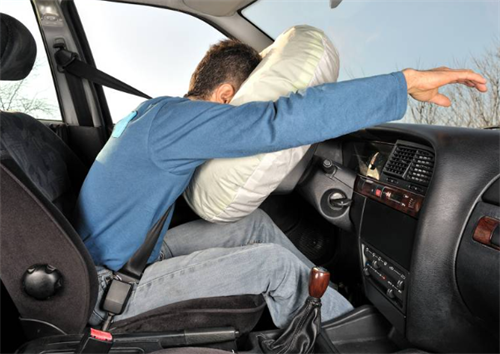
Among modern automotive safety technologies, the airbag is undoubtedly one of the most vital protective systems.It has protected millions of people and greatly enhanced the overall safety of vehicle occupants. Yet, despite being a standard feature in nearly every vehicle today, many drivers still don't fully understand how airbags work—or just how fast they really are. In fact, airbags deploy in an astonishing 30 milliseconds, making them ten times faster than the human blink.
30 Milliseconds: Lightning-Fast Reaction Time
The main function of an airbag is to instantly inflate during a collision, creating a cushion that reduces the impact force on the driver and passengers. While the concept seems simple, the speed and precision of the system are nothing short of remarkable.
When a crash occurs, sensors detect the impact almost instantly and send a signal to the airbag control unit. This activates a rapid inflation process where gas fills the airbag and causes it to burst out into place—all in just 30 milliseconds. To put it in context, a typical human blink lasts about 300 milliseconds.That means the airbag deploys ten times faster than a blink—faster than most people can even react.
This ultra-fast deployment is critical. In the fraction of a second when a collision begins, the airbag is already fully inflated, providing essential protection before the body can even begin to move forward.
How Do Airbags Deploy So Quickly?
This rapid deployment is made possible by a combination of sophisticated sensors, precise engineering, and chemical reactions.
Modern vehicles are equipped with numerous sensors positioned throughout the car. These sensors continuously monitor for sudden deceleration, impact forces, and crash angles. When the system detects a collision above a certain threshold, it sends an instant signal to ignite a small explosive charge or initiate a gas-producing chemical reaction inside the inflator.
This reaction rapidly generates gas—often nitrogen or argon—that inflates the airbag almost instantly. The fabric used in airbags, typically high-strength nylon, is designed to withstand intense pressure and heat, allowing it to inflate to full size in milliseconds without tearing.
More Than Speed: The Full Role of Airbags in Safety
While deployment speed is essential, airbag systems are also designed to work in harmony with other safety features. Most modern vehicles now include multiple types of airbags, such as:
Front airbags for driver and passenger
Side airbags to protect against side-impact collisions
Curtain airbags that deploy from the roof to protect occupants' heads
Knee airbags and rear seat airbags in newer models
These systems often work in coordination with seatbelt pretensioners, weight sensors, and seat position monitors to adjust the force and timing of airbag deployment based on the size and position of the passenger.
The Future of Airbag Technology:
Automakers are already working on next-generation airbags designed to protect all occupants more effectively, including rear-seat passengers and even pedestrians.
Artificial intelligence is being integrated into some systems to assess occupant posture, crash severity, and surrounding conditions in real time, making deployment smarter and more adaptive.
With the rise of autonomous driving, the role of airbags may shift even further. Future safety systems will likely rely more heavily on intelligent interior monitoring and proactive safety responses, ensuring protection regardless of whether a human is driving.
In Conclusion
Airbags may seem like a simple safety feature, but the technology behind them is incredibly advanced. Their ability to deploy in just 30 milliseconds—faster than the blink of an eye—is a testament to how far automotive safety has come. And with continued innovation, the future promises even more intelligent, effective ways to protect drivers and passengers on the road.
Recommended for you