China Produces 25% of the World’s Cars — One in Every Four Vehicles Comes from a Chinese Factory
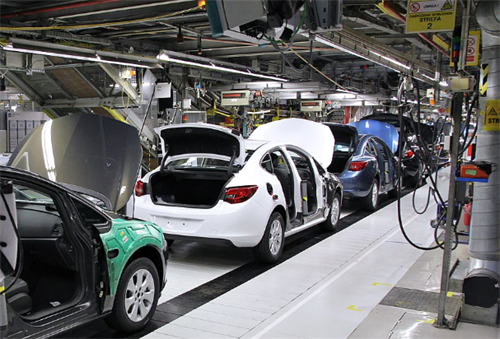
In recent years, China’s automotive industry has undergone a dramatic transformation. From early days of imitation and technology importation to today’s innovation and global expansion, China has steadily emerged as a major force in global car manufacturing. As of 2024, statistics show that one out of every four cars produced worldwide comes from a Chinese factory — accounting for 25% of global automotive output.
The Rise of China’s Auto Industry:
Although China was relatively late to enter the automotive arena, its growth has been nothing short of remarkable. Beginning in the mid-1990s, China’s car production began to take shape and soon scaled up rapidly. With the country’s economic boom and rising consumer spending power, China became a key battleground for global carmakers. A growing number of domestic and international companies established production facilities across the country, fueling a surge in output.
Entering the 21st century — especially after 2000 — China’s automotive technology began to mature. Domestic brands like BYD, Great Wall, and Geely rapidly gained traction, challenging both joint ventures and international brands within China. As they grew stronger, Chinese carmakers began expanding their ambitions to global markets. With ongoing innovation and technical advancement, Chinese car brands have increasingly gained recognition among international consumers and begun expanding into overseas markets.
A Global Manufacturing Hub: One in Four Cars Made in China
According to data from the International Organization of Motor Vehicle Manufacturers (OICA) and related sources, China is not only the world’s largest automotive consumer market, but also one of the top car manufacturing centers globally. In 2024, worldwide vehicle production exceeded 90 million units, with nearly 23 million manufactured in China — representing 25% of the global total. In other words, one in every four cars worldwide is built in a Chinese factory.
From traditional manufacturing processes to core technologies in smart and electric vehicles, Chinese factories have developed strong, integrated production capabilities. Whether it's gasoline-powered cars or new energy vehicles (NEVs), Chinese plants are able to meet the diverse demands of the international market efficiently and at scale.
Innovation Driving China’s Global Automotive Expansion:
As technology advances, China’s auto industry is evolving from a focus on “manufacturing” to one on “innovation.” This transformation is especially evident in the electric vehicle (EV) space, where China holds a clear technological edge. Domestic brands like BYD, NIO, and XPeng have made major breakthroughs in EV design and performance, establishing themselves as key players in the global market.
Beyond electrification, China is also leading in the development of smart vehicle technologies. Through partnerships with internet and tech giants, Chinese automakers are pushing the envelope in areas like autonomous driving, connected cars, and AI-assisted systems. These innovations are helping Chinese vehicles become increasingly competitive on the world stage.
What’s more, Chinese manufacturing is no longer confined to domestic borders. Many automakers have established overseas production bases to support global expansion. BYD, for example, has opened plants in Europe and the U.S., actively promoting the international rollout of its EV lineup. Other brands like Geely and Great Wall are also building out global supply chains and strengthening China’s position in the international automotive landscape.
Challenges Ahead for Chinese Automakers:
Despite these impressive gains, challenges remain. Competition from established international brands — especially in mature markets like Europe and North America — is still intense, with many consumers favoring local or traditional premium brands. Additionally, global economic uncertainties, such as fluctuating raw material costs and rising trade barriers, could pose risks to China’s automotive exports.
Nevertheless, China’s auto industry continues to show strong growth momentum. In particular, the country has already established itself as a global leader in the new energy vehicle sector and is expected to further consolidate and expand its presence in international markets in the coming years.
Recommended for you